Section Five
Science explains why you feel sick. Food is how you feel better. This is where the education meets the table — simple ingredients, traditional preparation, and the kind of cooking that nourishes the whole family without making wellness feel complicated.
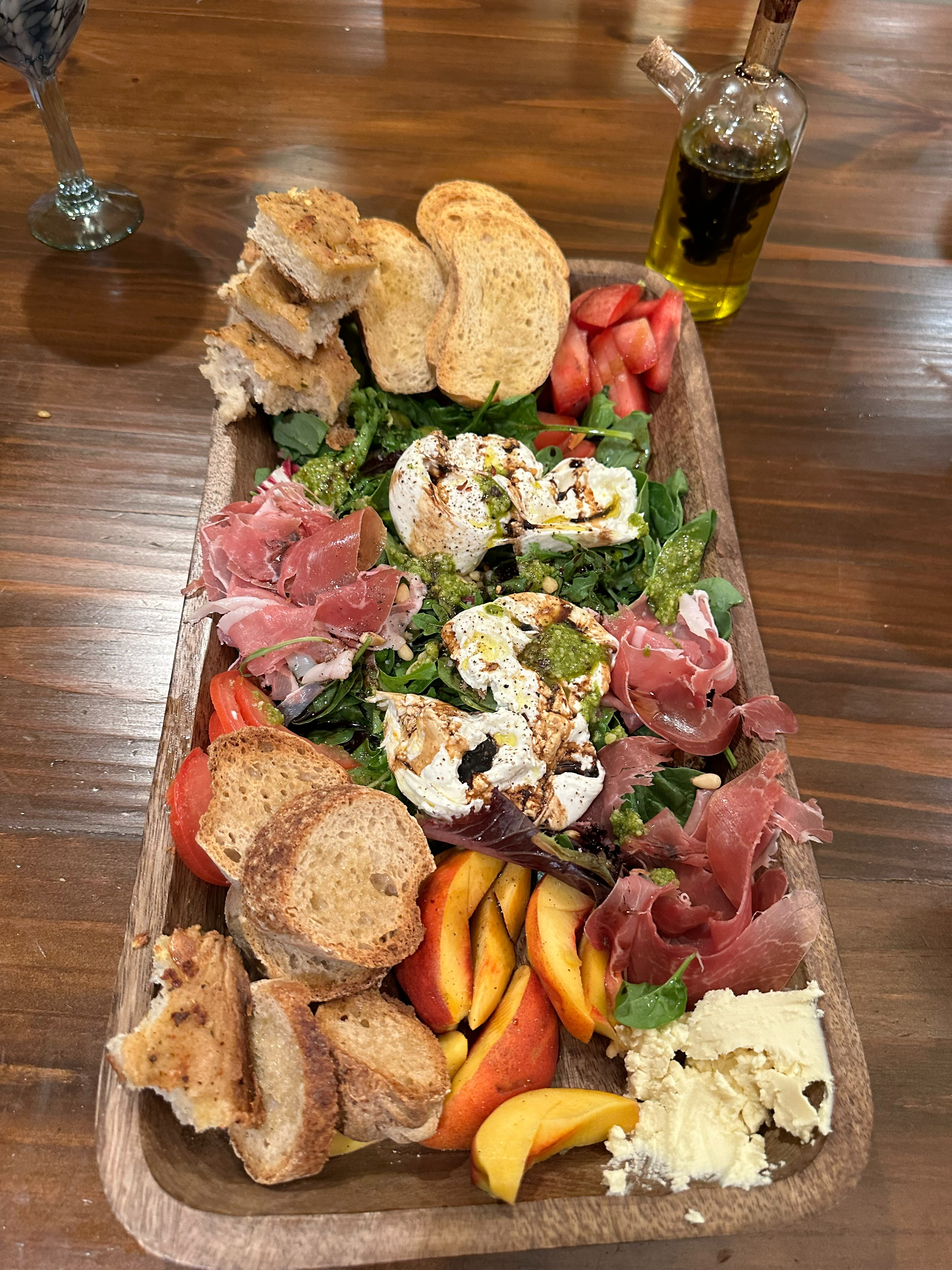
Sophie Salad — The heart of our real food approach
Whole ingredients, traditional wisdom, zero compromise. Named for the belief that good food should be simple enough to share with everyone you love.
Our Food Philosophy
Somewhere along the way, wellness eating became a source of anxiety. A long list of rules. Foods to fear, macros to track, ingredients to avoid. We lost the thread of what food is actually for — nourishment, pleasure, connection, and the simple act of caring for the people around your table.
We believe real food is the most powerful healing tool available to you. Not protocols. Not isolated supplements. Not the latest superfood trend. Just clean, whole, simply prepared food — made with quality ingredients, grown or raised well, and prepared with intention.
The body knows exactly what to do with real food. It recognizes every molecule. The more we return to the simplicity of real ingredients, the less the body has to fight through to find nourishment.
If it came from a plant, an animal, or the earth — your body knows what to do with it. If it came from a factory, it takes work to decode. We default to real every single time.
Soaking, sprouting, slow cooking, and fermentation are ancient techniques that increase nutrient bioavailability, reduce anti-nutrients, and make food genuinely easier on the gut.
One meal made from organic, pasture-raised, or locally grown ingredients nourishes more deeply than three meals of depleted conventional food. Nutrient density is always the goal.
Wellness eating shouldn't divide a household. Our recipes are designed to nourish every person at the table — from the youngest to those managing chronic conditions.
Eating seasonally connects us to the natural rhythms our bodies evolved with — summer cooling foods, autumn roots, winter warming broths. The body thrives when food follows nature's calendar.
Traditional Food Culture
Sourdough is one of the oldest food traditions in human history — and one of the most misunderstood in the modern wellness conversation. The long, slow fermentation process fundamentally transforms the flour, breaking down the proteins and anti-nutrients that make conventional bread so hard on digestion.
For those who have found that gluten causes distress, gluten-free sourdough — made from ancient grains, alternative flours, and a live fermented starter — offers a way to reclaim the pleasure of real bread without the inflammatory consequences of its modern counterpart.
We make our own. We share the process. And we believe that learning to bake a real loaf is one of the most grounding, nourishing, and genuinely healing things you can bring into your kitchen.
Phytic acid in grains binds to minerals and prevents absorption. 12–24 hours of sourdough fermentation breaks it down — making minerals in flour actually available to your body.
The live cultures in a sourdough starter begin breaking down gluten proteins and starches before the bread ever reaches your gut — significantly reducing the digestive work your body has to do.
Organic acids produced during fermentation slow starch digestion — resulting in a more gradual blood sugar response than conventional bread, even when made from identical flour.
Fermentation produces compounds that feed beneficial gut bacteria. Real sourdough isn't just easier to digest — it actively supports the microbiome that conventional bread disrupts.
Flour, water, salt, and a starter. No emulsifiers, no preservatives, no dough conditioners. When you bake sourdough yourself, you know every single ingredient in every single slice.
There is something profoundly healing about the act of making bread — the patience, the relationship with the living starter, the satisfaction of sharing a handmade loaf. Wellness lives here too.
The Heart of It All
Sophie Salad is not a recipe. It's a philosophy — a way of putting food together that is generous, colorful, nourishing, and endlessly adaptable. Named for the spirit of abundance and simplicity that we believe real food should always embody, it has become the signature of how we think about eating well.
The Philosophy
Sophie Salad starts with a generous base of greens — whatever is fresh and seasonal. From there it builds: roasted vegetables, a quality protein, something crunchy, something creamy, fresh herbs, mineral-rich salt, and a simple olive oil dressing made from scratch. No bottled dressings. No shortcuts. No compromise.
A key comfort addition to the Sophie Salad is slices of freshly baked gluten-free sourdough on the side — providing comfort, fiber, and gut motility support. The slow fermentation process makes it easy to digest, and it transforms a bowl of greens into a deeply satisfying, complete meal that the whole family will love.
Every element has a purpose. The greens provide chlorophyll and minerals. The protein provides amino acids for repair. The fats carry fat-soluble vitamins. The variety of colors guarantees a spectrum of phytonutrients that no supplement could replicate.
It is, in the most literal sense, a meal that nourishes every system in your body — and it takes twenty minutes to make.
Get the Sophie Salad GuideFrom Our Kitchen
Every recipe we share is built on the same principles — whole ingredients, simple preparation, maximum nourishment, and food the whole family will actually want to eat. No specialty equipment. No impossible-to-find ingredients. Just real food, made well.
Roasted seasonal vegetables over mixed greens with a lemon-olive oil dressing, toasted seeds, and fresh herbs. The foundation of the Sophie Salad philosophy.
Our signature slow-fermented gluten-free sourdough — a 24-hour process that produces a proper crust, open crumb, and bread that actually nourishes rather than inflames.
Slow-cooked for 12–24 hours with apple cider vinegar to draw minerals from the bones — a deeply nourishing foundational broth for gut healing, joint support, and daily mineral replenishment.
Our signature way to combine Vitamineral Green, Truly Natural Vitamin C, Earth Broth, and Moringa Manna into a morning drink that actually tastes good — with variations for every palate and sensitivity level.
Thick slices of freshly baked gluten-free sourdough toasted golden, topped with quality olive oil, mineral salt, and seasonal additions — avocado, pastured eggs, or fresh herbs. Comfort, fiber, and gut motility in every bite.
Freshly cooked chicken or turkey over rice with roasted carrots, steamed zucchini, fresh herbs, and olive oil. Clean, simple, and safe for even the most reactive histamine-sensitive individual.
Ingredient Stars
These are the ingredients that appear again and again in our kitchen — each chosen for its nutrient density, its therapeutic value, and the simple fact that it tastes genuinely good.
Foundational fat
Cold-pressed extra virgin olive oil is one of the most nutrient-dense and anti-inflammatory fats available. Rich in oleocanthal — a natural anti-inflammatory comparable in potency to ibuprofen at equivalent doses.
Become a salt connoisseur
Different locations and geological formations produce mineral salts with uniquely different trace mineral profiles — and we believe everyone should explore them. Baja Gold sea salt from Mexico is exceptionally rich in magnesium. French Grey sea salt (sel gris) provides deep ocean minerals and a complex flavour. Hawaiian sea salt offers iron-rich red volcanic clay varieties. Alaskan sea salt delivers pristine cold-water minerals. Each salt nourishes differently — season generously and rotate varieties for the broadest mineral spectrum. Real salt nourishes. Refined table salt depletes.
Liver & digestion
Fresh lemon juice stimulates bile production, supports Phase I liver detox, provides whole-food vitamin C, and alkalizes the body's pH. A daily kitchen essential on purely functional grounds.
Prebiotic & sulfur — with a caveat
Among the richest prebiotic foods available — feeding beneficial gut bacteria. Also rich in sulfur compounds essential for Phase II liver detox. A deeply functional food that works at the cellular level. However: garlic and onion are high in fructans — fermentable carbohydrates that can cause significant digestive distress for those on a low-FODMAP protocol or dealing with IBS or SIBO. If you react to them, removing temporarily during gut healing is entirely valid. Reintroduce once the gut environment stabilizes.
Phytonutrient density
Parsley, cilantro, basil, thyme, and rosemary are among the most nutrient-dense foods per gram on earth — packed with antioxidants, minerals, and anti-inflammatory compounds. Never a garnish. Always an ingredient.
Grounding minerals
Carrots, parsnips, sweet potato, beets, and turnips are deeply mineralizing foods that support blood sugar stability and provide prebiotic fiber for the microbiome — especially valuable during seasonal transitions.
Complete nutrition
One of nature's most complete foods — containing all essential amino acids, vitamins D, B12, choline, and zinc in bioavailable form. Pasture-raised eggs have significantly higher omega-3 and vitamin D content than conventional eggs.
Gut lining repair
Rich in collagen, glycine, proline, and gelatin — the structural proteins that repair and maintain the gut lining. A daily cup of properly made bone broth is one of the most direct gut-healing interventions in whole-food form.
Fat-soluble vitamins
Avocado fat dramatically increases the absorption of vitamins A, D, E, and K from every vegetable eaten alongside it. Also rich in potassium, magnesium, and B vitamins. Note: avoid during active histamine flares.
Guiding Principles
Not dietary rules. Not restriction rules. Just the simple principles that guide how we think about food — the difference between eating that depletes and eating that restores.
Real food doesn't need a long ingredient list. Complexity in a packaged product usually signals that something is being hidden, stabilized, or extended beyond its natural shelf life.
Quality fats — olive oil, coconut oil, grass-fed butter — are the vehicle for fat-soluble vitamins, the substrate for hormone production, and a source of sustained energy. Seed oils are the concern.
The pigments that give vegetables their colours are phytonutrients — each with distinct anti-inflammatory, antioxidant, and cellular protective properties. Eat the rainbow, and mean it.
Mineral salt is not the problem. Sodium in processed food — stripped of its mineral companions — is the concern. Season generously with real salt. Your adrenals will genuinely thank you.
The act of chopping, stirring, and preparing food slowly is itself a form of nervous system regulation. The rhythmic, sensory nature of cooking activates the parasympathetic system — rest and digest. Enjoy the preparation. Smell the herbs. Feel the textures. The kitchen is a healing space, not just a functional one.
The nervous system state in which food is eaten matters as much as the food itself. A shared meal eaten slowly and with pleasure activates parasympathetic digestion that no protocol can replicate.
Ancient Meets Modern
Before industrial food processing, before seed oils and artificial preservatives — people prepared food in ways that made it deeply nourishing and easy to digest. These weren't customs passed down arbitrarily. They were functional wisdom accumulated over centuries of human health.
Many of the chronic digestive and inflammatory conditions we see today are directly linked to the abandonment of these traditional preparation methods. Their revival in the modern kitchen is one of the most powerful things we can do for lasting wellbeing.
We don't need to live in the past. We just need to remember what the past got right — and bring it into a modern life that makes genuine sense today.
Sourdough Fermentation
12–24 hours of wild yeast fermentation breaks down phytic acid, pre-digests gluten proteins, and lowers glycemic impact. One of the oldest food technologies in human history — and one of the most justified.
Bone Broth Simmering
Long, slow simmering of bones with apple cider vinegar extracts collagen, glycine, and minerals that heal the gut lining and nourish connective tissue in ways no supplement can fully replicate.
Grain & Legume Soaking
Overnight soaking activates enzymes that break down phytic acid — making grains, beans, and legumes dramatically easier to digest and significantly more nutrient-available to the body.
Lacto-Fermentation
Salt-preserved fermented vegetables supplied live cultures, increased vitamin content, and supported gut immunity in virtually every traditional food culture. However — a critical note for histamine-sensitive individuals: fermented foods are among the highest histamine-containing foods available. Long fermentation dramatically increases histamine content. If you have MCAS, histamine intolerance, or are in an active gut healing phase, fermented foods can trigger significant reactions and should be reintroduced very cautiously, if at all, until the histamine bucket has cleared.
Fat-Soluble Cooking
Traditional cuisines universally cooked vegetables in quality fats — because fat-soluble vitamins in vegetables are literally unavailable to the body without a fat vehicle present in the same meal.
Herb & Spice Integration
Every traditional cuisine used medicinal herbs and spices for their therapeutic properties — turmeric's curcumin, ginger's gingerols, garlic's allicin. This was medicine integrated seamlessly into daily eating.
"When food is simple, whole, and made with care — the body recognizes it as exactly what it needs. No label required. No guesswork. Just nourishment."
The education we share is powerful — but it lives or dies at the table. If you want to take everything you've learned about your body and translate it into how you actually eat, the Sophie Salad Guide and our recipe library are where to begin.